Let’s agree that Hackers deserve a special place in H*LL. Our manifesto explains this more.
Hackers attack WordPress website for three simple purpose
- Financial (Ransom, sell info, ads)
- Reputational (Ego, get hired)
- Ideological (disagree with politics etc)
Website hackers have various motivations and motives depending on their goals, skill levels, and the resources they seek to exploit.
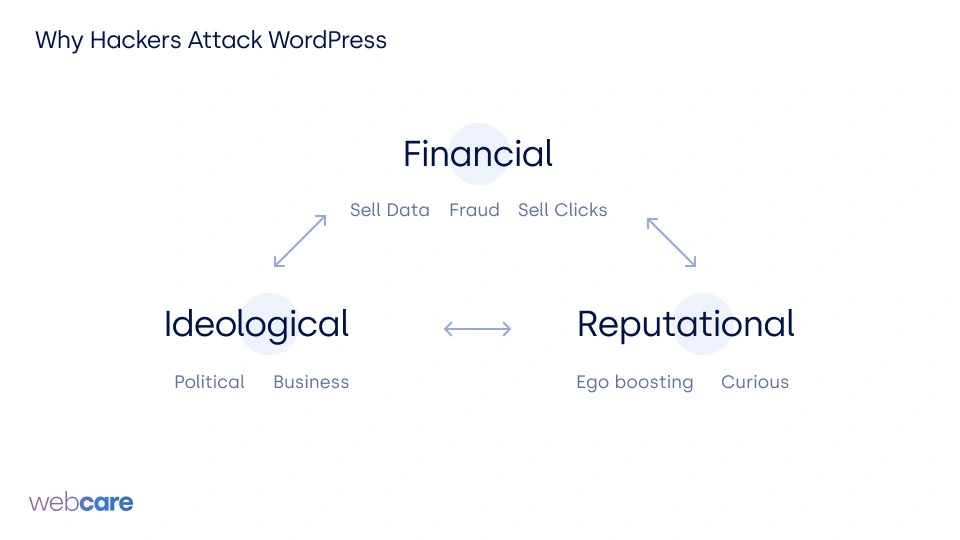
Here are the most common motivations behind website hacking
Why Attack WordPress?
If you didn’t know, WordPress 43.5% of the world website. It’s free, easy to build (relatively) and accessible. WordPress has thousands of plugins and themes, which makes it ideal to find loophole and gaps between security.
Why attack WordPress?
- Easy to exploit
- Has the biggest number
- Not many know how to maintain WordPress
Table of Contents – Why Attack WordPress
1. Attack WordPress for Financial Gain
Stealing Personal and Financial Information: Hackers aim to steal sensitive data such as credit card numbers, banking details, or personal information (like Social Security numbers). This data can be sold on the dark web or used for identity theft.
– Hacker sells these data online forums.
Ransomware: Hackers encrypt the website’s data and demand a ransom to restore access. Ransomware attacks have become common in targeting businesses and organizations.
– Hackers ask for payment to release the website
Ad Fraud: Hackers may compromise a website to display fraudulent ads or engage in click fraud, generating revenue from fake traffic or advertisements.
– Sends click to their affiliate website. Quickest way to make money automatically
Cryptojacking: Hackers inject cryptocurrency mining scripts into websites, using visitors’ computational power to mine cryptocurrencies for their own benefit.
– Use up your Server RAM, CPU and GPU to mine crypto
2. Data Theft
Harvesting User Information: Hackers may steal usernames, passwords, email addresses, or other personal data from users of the website. This information can then be used for identity theft, phishing attacks, or sold to other criminals.
– Most often sold to competitor, can be found in online forums
Corporate Espionage: Competitors or other entities may hire hackers to steal intellectual property, trade secrets, or internal communications from a business website.
– Or business did terrible thing to them, it’s their way of payback
3. Hacktivism (Political/Ideological Motives)
Protests and Social Causes: Some hackers, often referred to as hacktivists, attack websites to promote political, social, or ideological messages. They may deface websites with political messages, shut down services, or leak information to the public.
Government or Corporate Criticism: Hacktivists may target government or corporate websites as a form of protest against their policies or actions.
4. Attack WordPress to Spreading Malware
Infecting Users: Hackers can compromise websites to distribute malware, infecting visitors’ computers without their knowledge. This malware can steal data, spy on users, or turn their devices into part of a botnet.
Botnet Recruitment: Some hackers aim to infect as many devices as possible to create a large network of compromised devices (botnet) that can be used for future cyberattacks, such as Distributed Denial of Service (DDoS) attacks.
5. Reputation and Ego
Gaining Recognition: Some hackers attack websites to showcase their skills to the hacker community or gain personal satisfaction. This is especially true of young hackers or those seeking to build a reputation in the black-hat community.
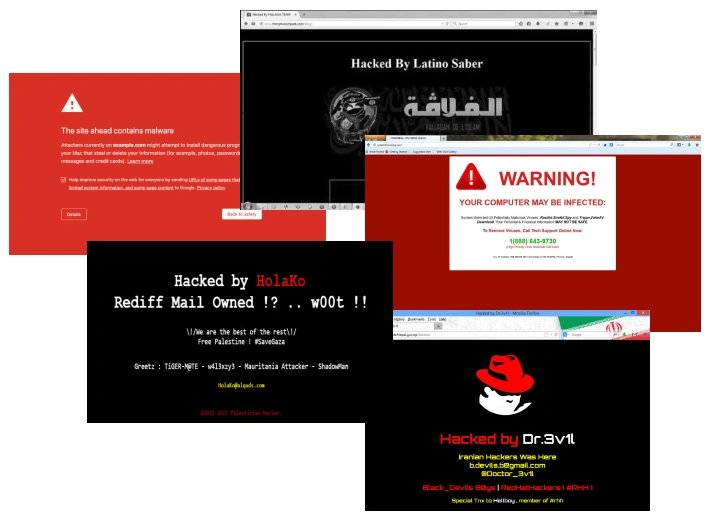
Bragging Rights: Hacking high-profile websites can give hackers bragging rights, boosting their status among peers or in online forums.
Vandalism: Hackers may deface a website by changing its content to display offensive, embarrassing, or political messages. Website defacement is often carried out by hackers looking for attention or to harm the reputation of the target.
6. Denial of Service (DoS/DDoS)
Disrupting Services: A DDoS attack overwhelms a website with traffic, causing it to become inaccessible. This can be motivated by competition, extortion, political motives, or simply to cause disruption.
– Blocked actual users from performing legal activities. Happens in polls, ecommerce websites.
Extortion: Sometimes hackers initiate a DDoS attack and demand a ransom to stop the attack, which is known as a “ransom denial of service” (RDoS).
7. Exploiting Vulnerabilities for Fun or Learning
Testing Skills: Some hackers, particularly “script kiddies” or novice hackers, hack websites for fun or as a learning experience. They may not have any specific goal other than proving they can break into a site.
Curiosity: Some hackers are driven by curiosity, seeking to explore system vulnerabilities to see what they can find or exploit.
8. Hack WordPress for Spamming
SEO Spam: Hackers may compromise websites to insert malicious links or advertisements to improve the search engine ranking of other websites or to redirect traffic to spammy sites
Email Spam: A hacked website might be used to send out large volumes of spam emails, often containing phishing links or malware, under the guise of the legitimate website.
9. Political or State-Sponsored Cyber Attacks
- Cyberwarfare: State-sponsored hackers may target government or critical infrastructure websites of another country. These hackers often work with political motives, aiming to disrupt services, gather intelligence, or create geopolitical instability.
- Espionage: State-sponsored hackers may compromise websites to steal sensitive information, intellectual property, or government secrets.
Hackers can range from individuals with minimal technical skills to organized groups backed by criminal syndicates or nation-states. Read more on WordPress hack attack by WPScan
Their motives typically reflect the value they expect to gain from the target, whether it’s financial, reputational, or ideological.
Do you need help with WordPress security? Go to WordPress Care find out more about what we do.